Agree on a format
Inspect both sides under the intended light before relying on a quiet reverse page.
Independent print, shared authorship
Zunareviko follows the life of a publication from first paper mock-up to shared edition, with exercises in colour, collaboration and deliberate circulation.

01 / Begin with a sheet
Agree on a format and one shared constraint, then invite different responses. The common edge of the paper can connect voices without making them look identical.
02 / The paper route
Work through a sequence of small agreements. Decide who handles the next proof, what can still change and how each contribution will be acknowledged.
Inspect both sides under the intended light before relying on a quiet reverse page.
Allow small shifts to be part of the graphic language when perfect alignment is unrealistic.
Writing, illustration, editing and printing can be acknowledged separately in a compact colophon.
Move a reveal across a page turn and compare how that changes the reader's anticipation.
Use a full-thickness dummy to discover whether the inner margin remains readable.

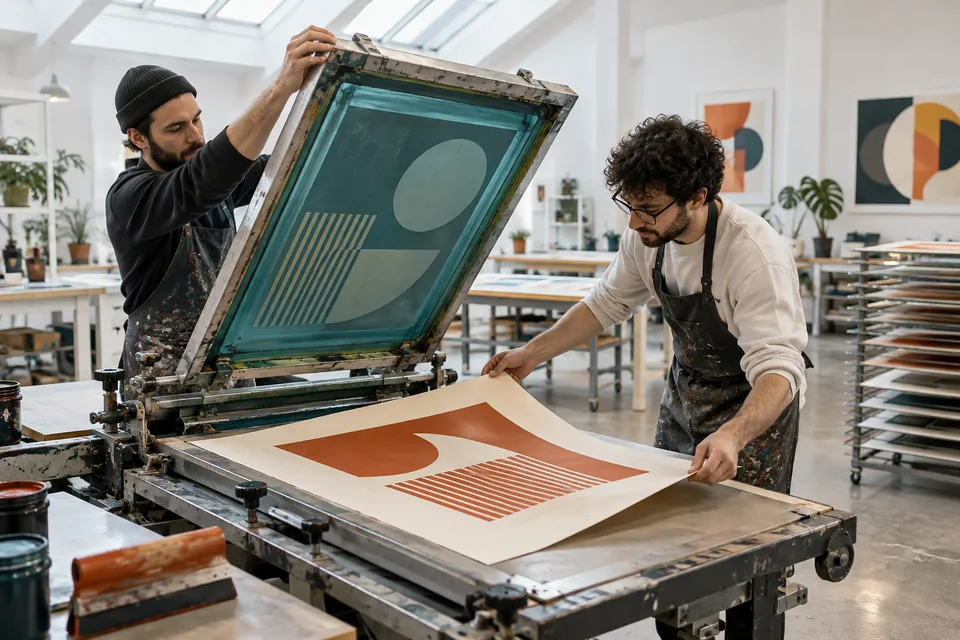
03 / The shared worktable
Arrange incoming artwork, clean sheets and finished copies in separate areas. Clear transitions help a group notice when a page has been approved or still needs attention.
Read the print exercises04 / Choose a working mode
A collaborative edition benefits from alternating individual work with shared inspection. Choose the mode that answers the current uncertainty.
Make two small proofs with the competing decisions. Discuss the visible result on the intended stock instead of choosing from a screen simulation.
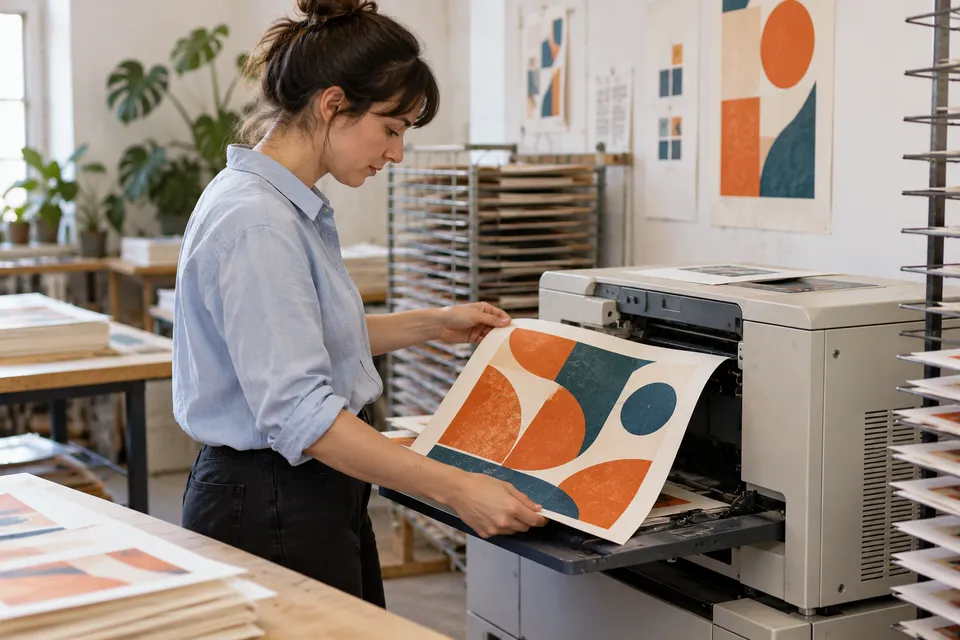
Label the approved sample and place it where each contributor can see it. Compare later sheets against that sample when the colour or registration begins to drift.

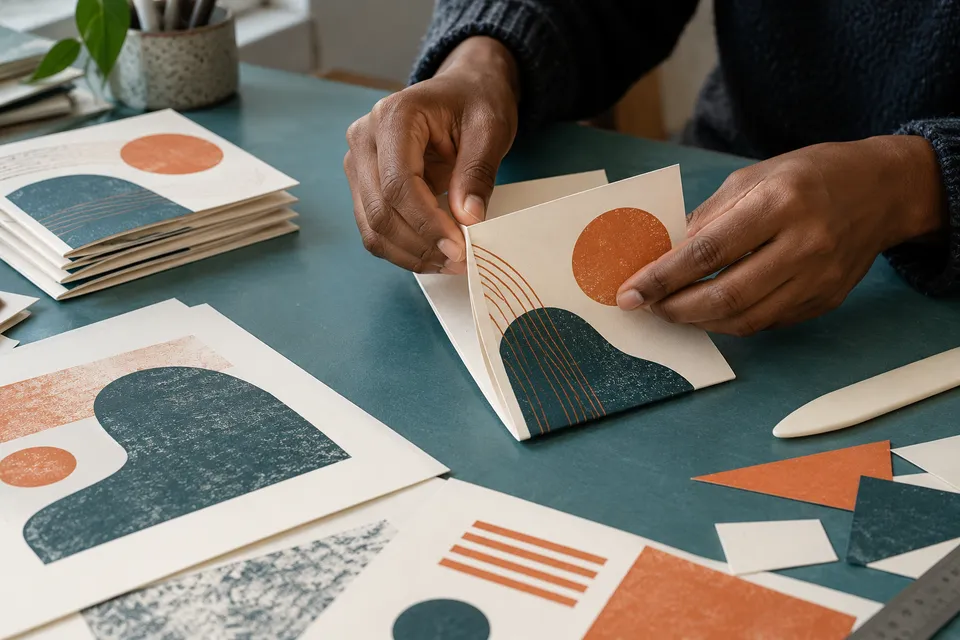
Hand over a dummy with no spoken introduction. Ask the reader to describe how they navigated it, then distinguish a surprising reading from an actual obstruction.
05 / Hold the sequence
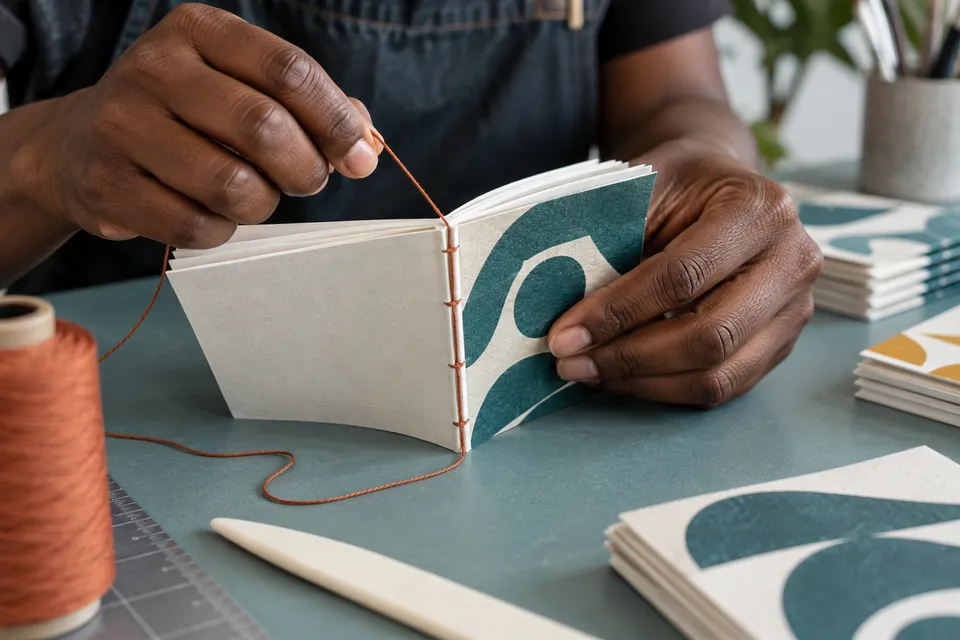
Test the binding with the actual thickness of the planned contributions. A page that refuses to lie open can change how a spread is read, so resolve the physical issue early.
Explore binding06 / Before the run
Tick the agreements your group has made. The checklist is saved only in this browser and can be cleared before another edition.
0 / 6 complete
07 / A searchable reference desk
Find a compact note about registration, paper, credit or distribution. Search considers the whole card, allowing a practical phrase to lead you to the relevant idea.
6 prompts available
Inspect both sides under the intended light before relying on a quiet reverse page.
Allow small shifts to be part of the graphic language when perfect alignment is unrealistic.
Writing, illustration, editing and printing can be acknowledged separately in a compact colophon.
Move a reveal across a page turn and compare how that changes the reader's anticipation.
Use a full-thickness dummy to discover whether the inner margin remains readable.
Provide enough context for someone outside the group to understand what they are holding.
08 / Proofs in public
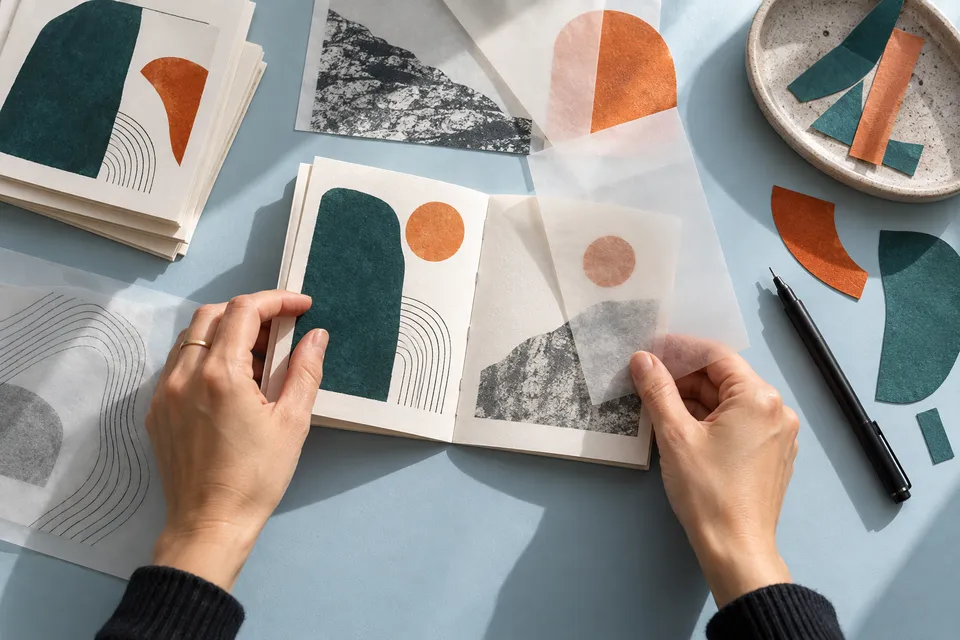
A temporary proof wall gives the group a common object to discuss. Keep versions in order so a revision can be compared with the question that prompted it.

09 / At the press
A production conversation is easier when responsibilities and constraints are visible. Use these starting points before the final files become difficult to change.
10 / Beyond the table
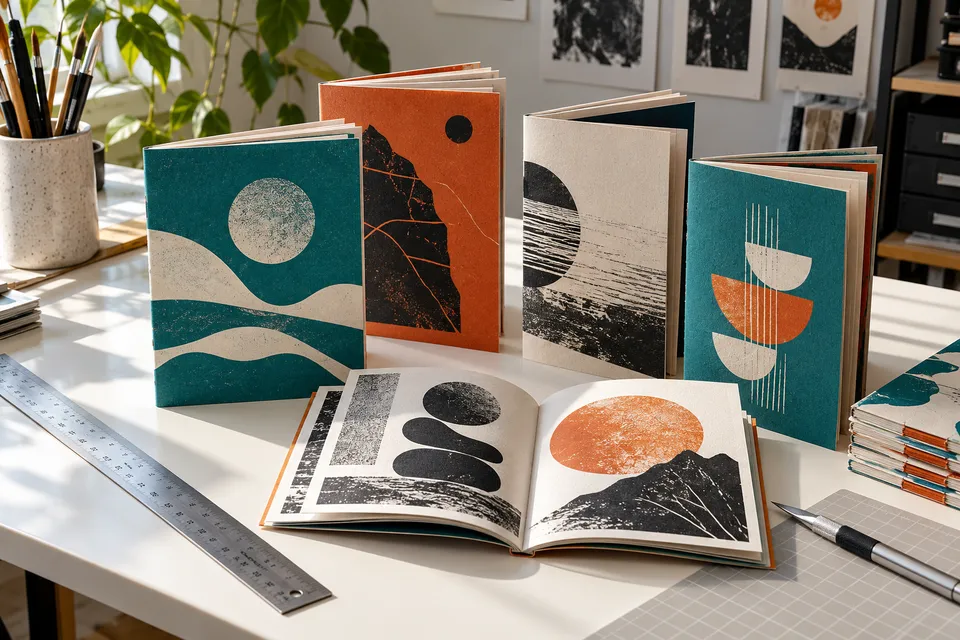
Plan how a reader encounters the edition: a table, an exchange, a small event or a direct handover. Packaging and context can support the work without becoming a substitute for it.